Larval transport studies
Follow the currents that shape marine connectivity
Deploy GNSS-tracked Lagrangian drifters to observe transport, retention, exchange, and dispersion across reefs, coastlines, estuaries, and the open ocean.
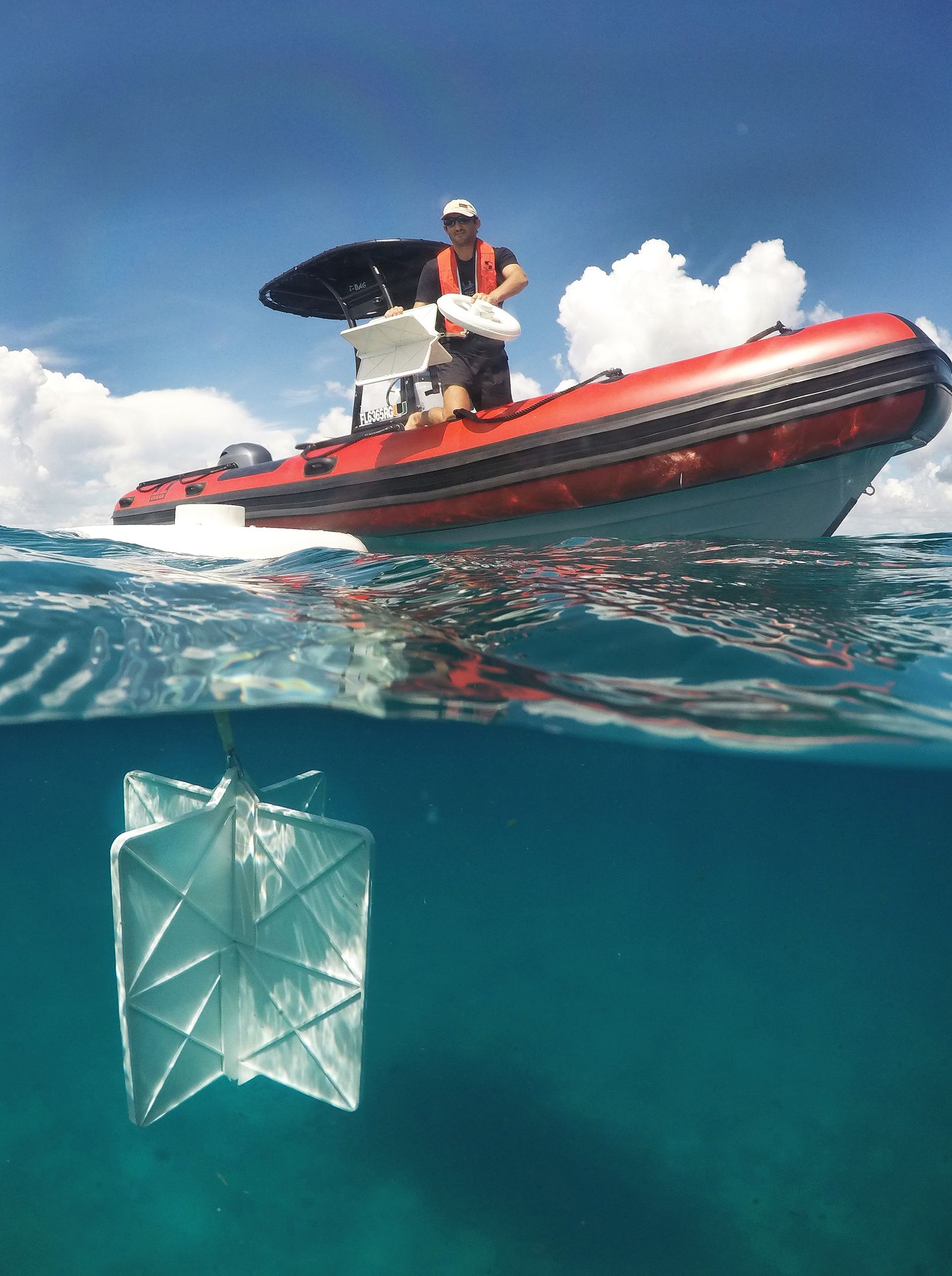
Measure the physical transport component
Larval dispersal reflects both ocean motion and biology. Drifters provide direct observations of the currents moving near-surface water parcels, while biological sampling and models account for swimming behavior, vertical migration, development, and mortality.
Release drifter clusters at spawning sites, reef passages, restoration areas, or model boundaries to identify pathways, quantify dispersion, and test predicted connectivity.
Connectivity
Identify likely transport pathways among reefs, nurseries, spawning grounds, and protected areas.
Retention and export
Observe whether surface waters remain near a habitat or move larvae toward neighboring systems.
Dispersion
Deploy clusters to measure separation rates and the spread of a release through time.
Model validation
Compare observed tracks with hydrodynamic and particle-tracking model predictions.
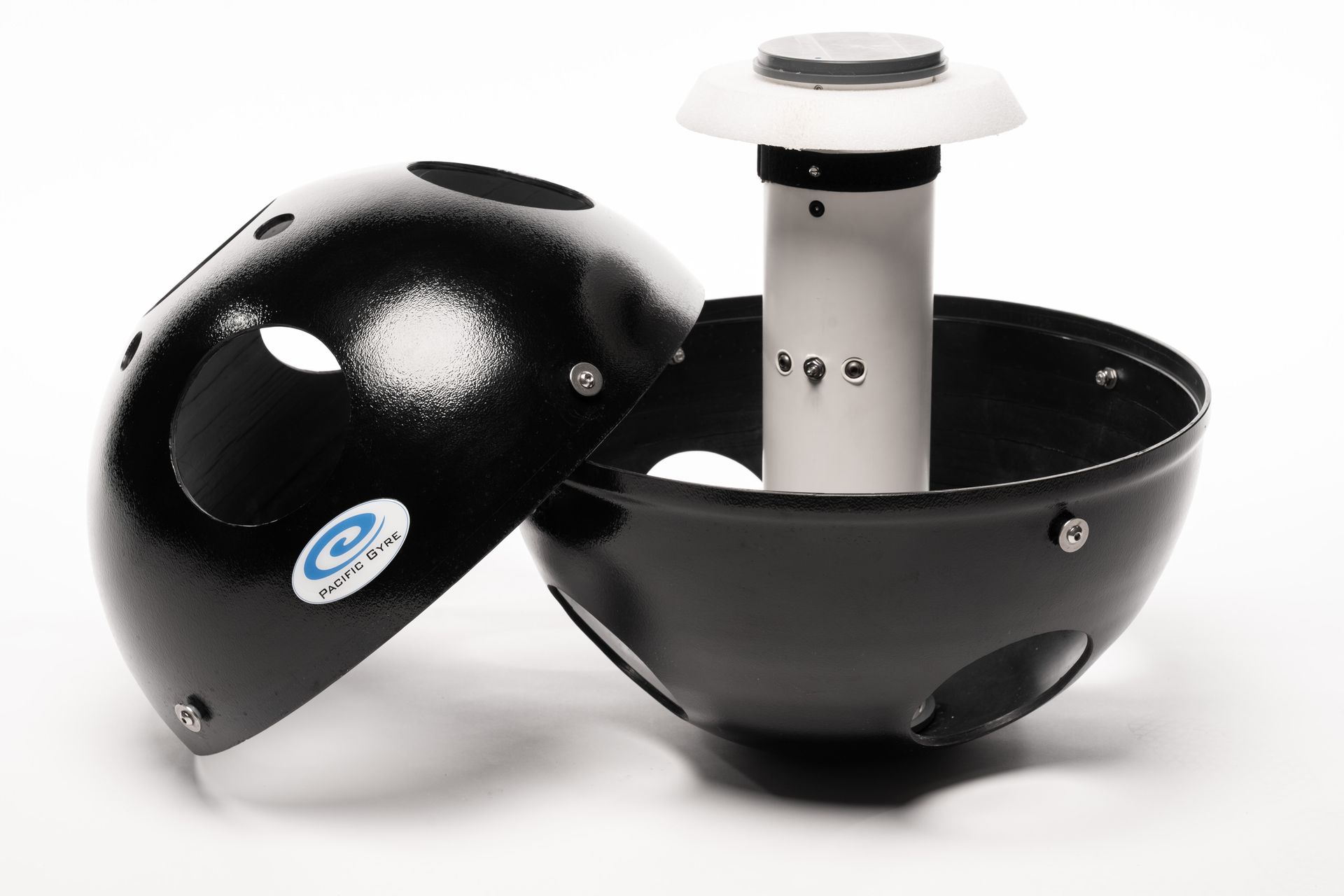
Design the release around your transport question
1Select the current-following depth
Match the drifter to the portion of the water column most relevant to the target life stage and study environment.
2Deploy replicates or clusters
Use coordinated releases to separate persistent pathways from small-scale variability and dispersion.
3Monitor tracks in near real time
Review array status and positions through Pacific Gyre's web-based data services during field operations.
4Download and integrate the data
Retrieve archived observations for analysis, visualization, model comparison, and reporting.
Choose the drifter that matches the transport depth
Pacific Gyre platforms cover shallow reef environments, coastal surface layers, and deeper mixed-layer studies.
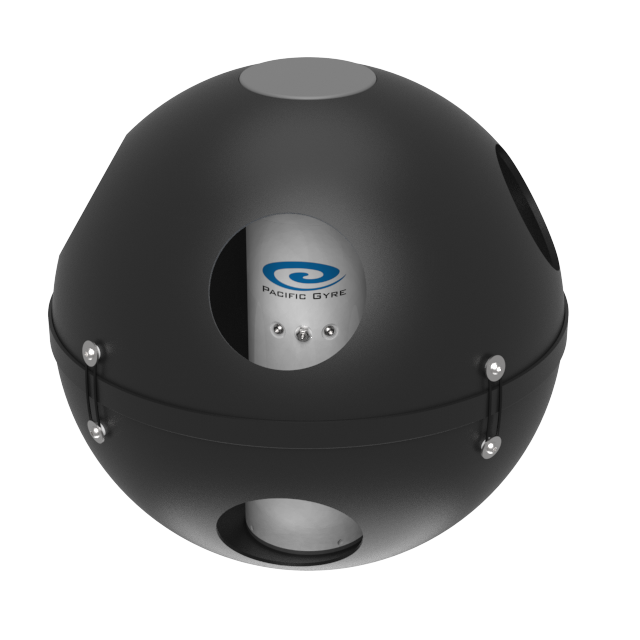
Near-surface, tetherless
Reef Drifter
Designed for shallow areas where a tethered drogue could snag on reefs or underwater obstructions. The semi-submerged float follows surface currents.
View Reef Drifter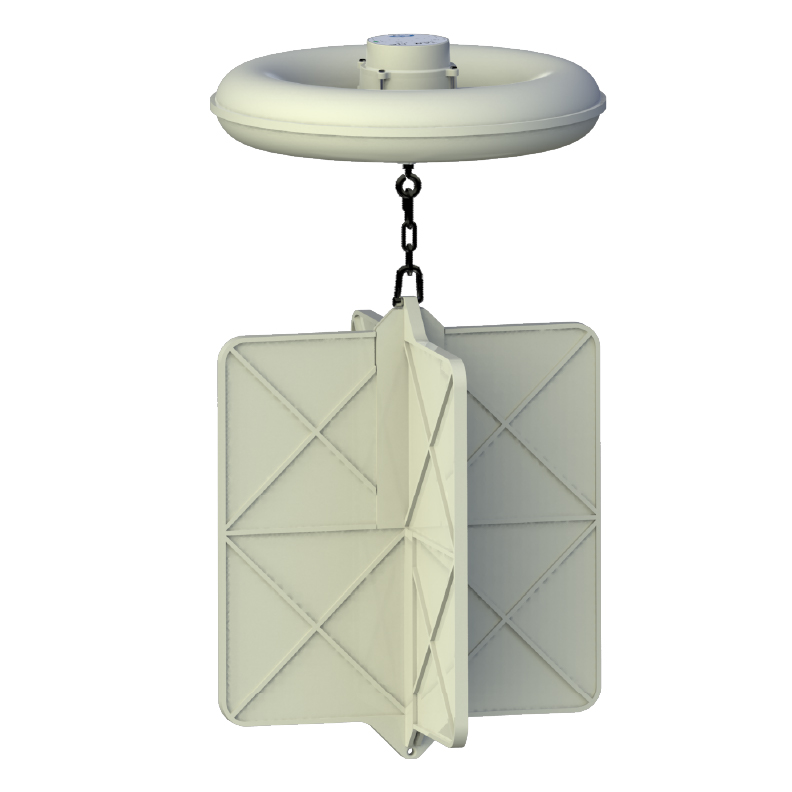
Currents centered at 40 cm
CARTHE Drifter
A low-cost platform suited to large coordinated deployments for coastal transport, retention, and dispersion experiments.
View CARTHE Drifter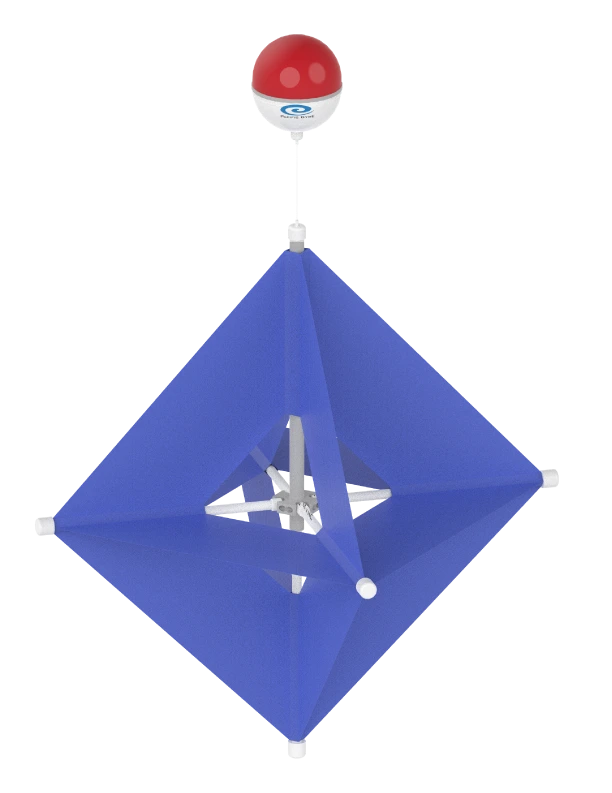
Currents at 1 meter
Microstar Drifter
A compact drogued drifter for coastal and shallow-water circulation, dispersion, and larval transport studies.
View Microstar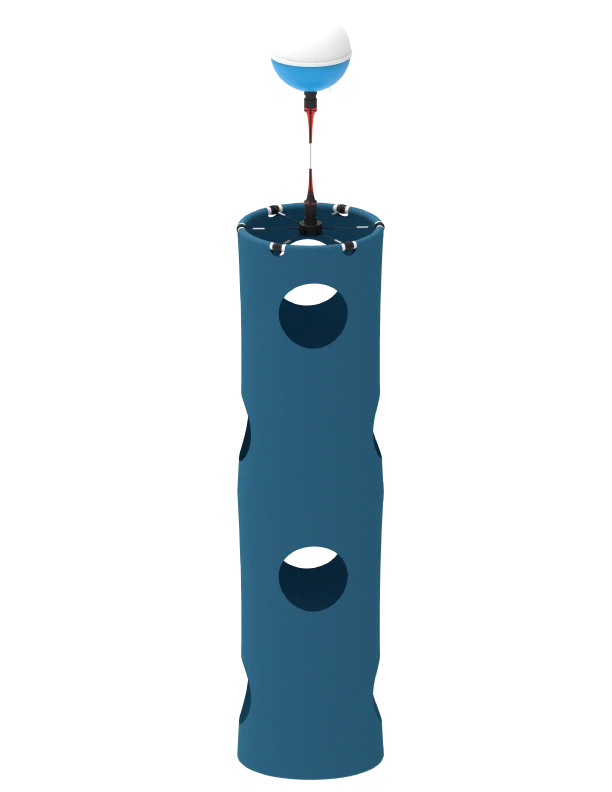
Configurable mixed-layer depth
SVP Drifter
A robust drogued platform for open-ocean and deeper mixed-layer transport studies, with configurable drogue depth and sensor options.
View SVP DrifterFrom deployment to analysis
GNSS positions and status data are transmitted to Pacific Gyre's data system, converted to useful units, displayed on a browser-based map, and archived for later analysis.
Download observations through the browser or API for use in GIS, MATLAB, Python, spreadsheets, and modeling workflows.
Explore data services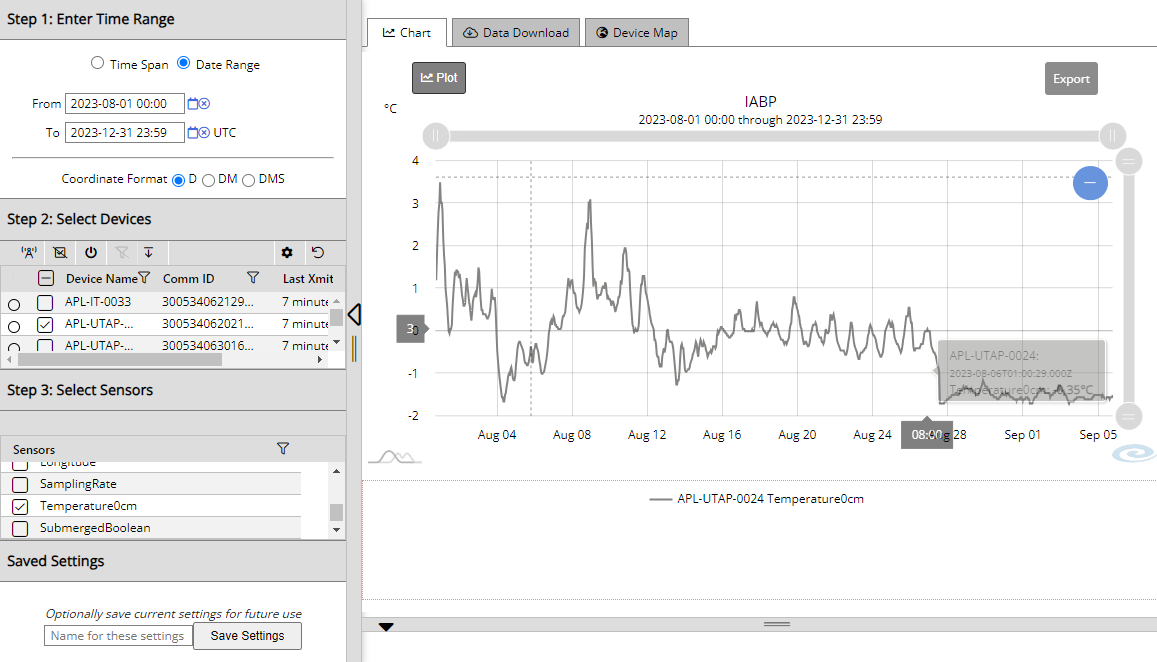
Plan a larval transport study with the right depth, array size, and telemetry
Tell us about the habitat, deployment duration, release strategy, and transport depth. We will help you select an appropriate platform and configuration.